
Anthony Lagoon Police Station
Remote outpost of the Barkly Tablelands, established in 1889 to support policing, pastoral settlement, and cattle movement across the region.
For 90 years, police and Aboriginal trackers patrolled vast distances, playing a vital role in the development of the Barkly cattle industry and local communities.

The Anthony Lagoon Police Station is located 260 kilometres northeast of Tennant Creek. It is situated in the far northern section of the Barkly Region Council on the Barkly Tablelands. Opened in October 1889 as a police station/camp, with two officers being EE Ernest Smith and Charles Roberts. They brought with them two horses and the police camp initially consisted of tents and temporary huts. Established to monitor the cattle in the district and stop horse and cattle stealing.
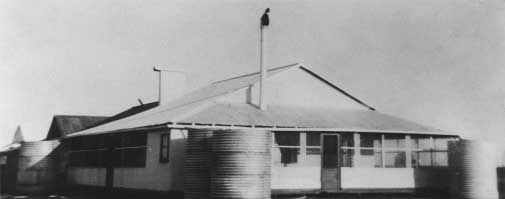
A new station was built in 1905 comprising of three parts. A house for the Constables and their wives/families, a police office and quarters for the Aboriginal Trackers. The cells were out the back. The officers were highly regarded, many good reports were written about them in the local Queensland and South Australian papers. One report mentioned a kindly police trooper - it described how Mounted Constable Murphy saved the life of a man who was seriously injured in a water cart accident, where it was reported that "the poor fellow was carried to the Police Station, where he was tended like a brother by constable Murphy, who set the broken bones with the assistance of a veterinary surgeon, and thereafter nursed the injured man.
It was a two-man station. In the 1930's one officer (married) was required to stay and oversee the big cattle mobs being driven down the stock route to dip them for ticks and issue waybills to the drovers. The second officer (single) spent most of his time on patrol. This meant weeks of hard riding with a plant of horses, fairly meagre rations and an Aboriginal police tracker. In a story from Joan Deans describes how Mable Bridgeland had approached Tiny Deans one day and said "we are getting short of stores Tiny, so you'll have to go on patrol". Patrols in those days meant an area north to Walhallow, west to Eva Downs, Renner Springs, Helen Springs, Muckatey, Banka Banka, Brunchilly, Rockhamton Downs and Brunette Downs and east as far as Calvert Hills, Wollogorang and the Nicholson. They would be away for six to eight weeks at a time and apart from tea, sugar, flour, tobacco, spuds, onions and a few luxuries like jam, cocky's joy (golden syrup), baking powder, sultanas and an odd tin or two, they were expected to live off the land or friendly stations
The station has been a crucial part of the Barkly region's development, serving as a police station and a meeting place for settlers, travellers, and pastoralists. The station's construction of the first government cattle dip in 1906 was a significant development, as it helped reduce the incidence of diseases affecting cattle and was a vital feature in the beef cattle industry. The station has been a part of the Anthony Lagoon Station Precinct, which was formed in 1889, and has undergone many changes in management and lease ownership until it is now managed by the Australian Agricultural Company.
From 1870 to 1911, the Northern Territory came under the administrative control of South Australia, which included police services. Anthony's Lagoon police station was closed in 1979 and Avon Downs Police Station took control of the area. The old station is still standing and is heritage listed.
The NT Police Station at Anthony’s Lagoon was opened in 1889.
S/Const Hugh Deviney in a boat on Anthony's Lagoon, late 1930's
